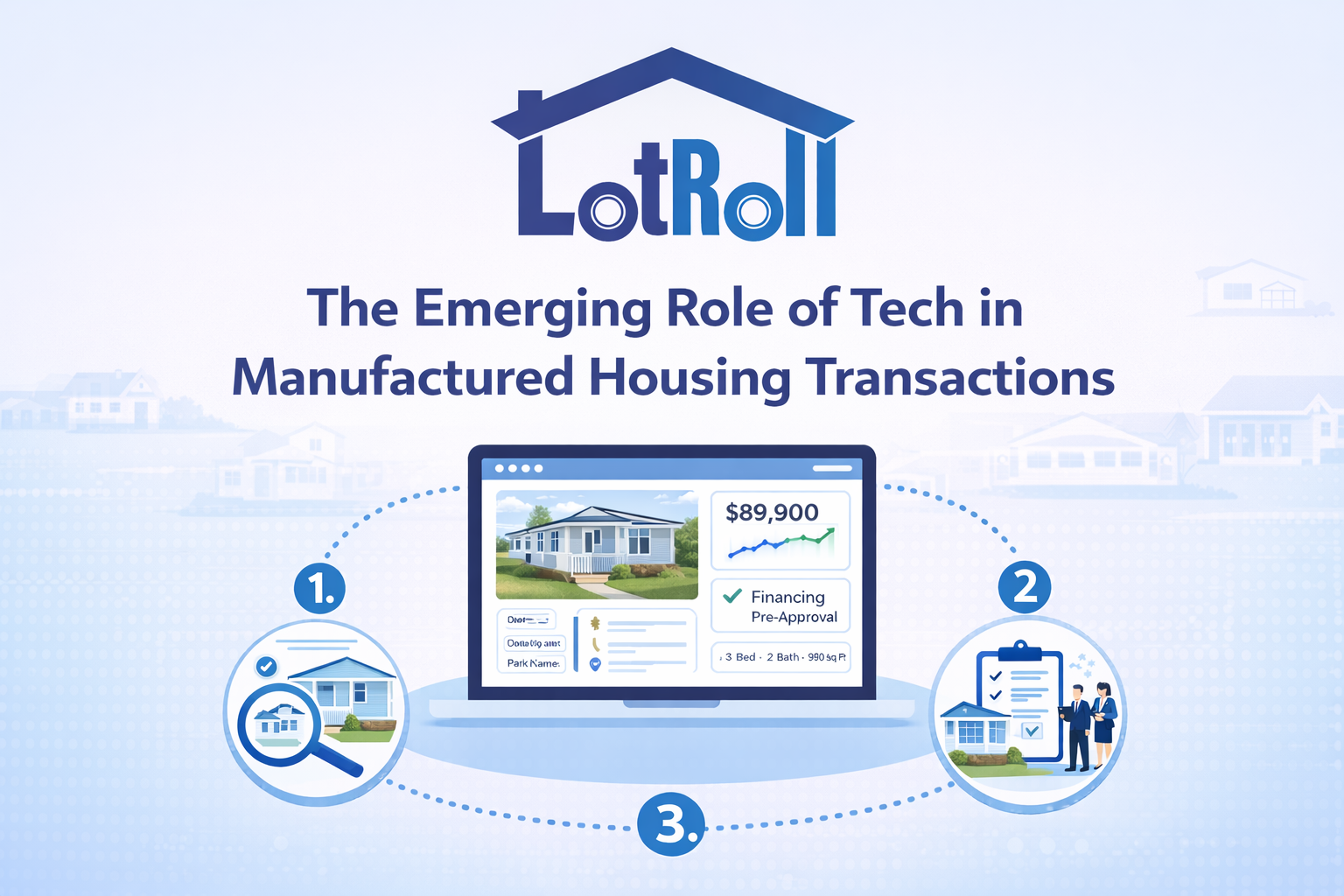
How Digital Platforms Are Modernizing a $1.2T+ Asset Class
Manufactured housing represents one of the largest yet most overlooked segments of U.S. real estate. Despite being a critical source of affordable housing, the transaction process for buying and selling manufactured homes has historically been fragmented, manual, and difficult to navigate.
Today, technology is changing that.
From standardized listings to integrated financing and valuation tools, digital platforms like LotRoll are introducing structure, transparency, and automation into a market that has long lacked modern infrastructure.
Here is how tech is transforming manufactured housing transactions and what buyers and sellers can expect next.

Why Manufactured Housing Has Lagged Behind in Technology
Unlike traditional real estate, manufactured housing has operated in a patchwork system:
- Inconsistent listing formats
- Limited MLS visibility
- Manual title transfers
- Fragmented valuation data
- Separate financing and insurance processes
- Limited transparency on lot rent and park information
Because manufactured homes can be titled as either personal property or real property depending on the state, the transaction workflow often differs from traditional residential real estate. This complexity has historically discouraged large platforms from prioritizing the segment.
The result has been an underserved but massive market with limited digital tools.
How Technology Is Changing Manufactured Home Transactions
Modern platforms are now solving these long-standing inefficiencies by introducing three major improvements: data, automation, and standardization.
1. Data Transparency and Structured Listings
Historically, manufactured home listings varied dramatically in quality and completeness. Important details such as park name, lot rent, year, model, financing eligibility, and land status were often missing.
Technology platforms now:
- Standardize listing data fields
- Organize homes by park and location
- Provide valuation insights
- Improve search and filtering
- Surface lot rent transparency
Standardized data improves pricing accuracy and reduces renegotiations, which creates a smoother transaction for both buyers and sellers.
2. Integrated Financing and Pre-Approval Tools
Manufactured home financing differs from traditional mortgages. Buyers may need:
- Chattel loans
- FHA Title I loans
- Land-home conventional financing
- Specialized underwriting
Digital platforms are integrating pre-qualification tools directly into listings, allowing buyers to check eligibility before making offers. This reduces fallout and speeds up time to close.
For sellers and agents, this means more serious buyers and fewer failed contracts.
3. Automated Lead Routing and Transaction Workflows
Technology is also improving the backend of manufactured housing transactions.
Modern systems can:
- Automatically route buyer inquiries to agents
- Track referral sources
- Integrate appraisal workflows
- Connect insurance providers
- Provide transaction status updates
This reduces manual follow-up and improves conversion rates across the ecosystem.
The Role of Platforms Like LotRoll
LotRoll was built specifically for manufactured housing. Instead of adapting traditional real estate infrastructure to a different asset class, it was designed around the unique needs of this market.
LotRoll introduces:
- State-level structured listing infrastructure
- Park-based search organization
- Integrated valuation tools
- Built-in financing pathways
- Data transparency around lot rent and park details
- Standardized lead generation for agents
By focusing exclusively on manufactured housing, LotRoll is helping modernize an asset class that has historically operated without consistent digital standards.
What Innovations Are Coming Next
Technology adoption in manufactured housing is still early. Over the next several years, we expect to see:
1. Real-Time Valuation Models
More refined pricing algorithms specific to manufactured homes and parks.
2. Full Digital Closings
Streamlined title transfers and document workflows tailored to chattel and land-home transactions.
3. Integrated Park Data
Improved visibility into lot rent trends, park ownership changes, and occupancy data.
4. Predictive Lead Scoring
Smarter buyer qualification based on financing readiness and engagement behavior.
5. State-by-State Expansion
Scalable digital infrastructure rolling out across multiple states, increasing efficiency and lowering customer acquisition costs as brand recognition grows.
Why This Matters for Buyers and Sellers
For buyers:
- More transparency
- Faster approvals
- Cleaner pricing
- Fewer surprises
For sellers and agents:
- Higher-quality leads
- Improved pricing confidence
- Reduced transaction friction
- Stronger brand positioning within the manufactured housing niche
As technology reduces inefficiencies, transaction costs decline and margins improve. That creates a healthier ecosystem for everyone involved.
Manufactured Housing Is Entering Its Infrastructure Phase
Traditional residential real estate has benefited from decades of digital infrastructure investment. Manufactured housing is now entering that same phase of modernization.
The combination of:
- Standardized data
- Integrated financing
- Automation
- State-level digital expansion
is transforming a historically fragmented market into a more transparent and scalable ecosystem.
The manufactured housing sector may have lagged in technology adoption, but it is now accelerating quickly.
And platforms purpose-built for this asset class are leading the shift.
Final Thoughts
Manufactured housing is not a niche. It is a foundational component of affordable housing in America.
Technology is not replacing agents, lenders, or park operators. It is giving them better tools.
As digital infrastructure expands state by state, the market becomes more efficient, more transparent, and more investable.
The next chapter of manufactured housing will be data-driven, automated, and standardized.
And it has already begun.