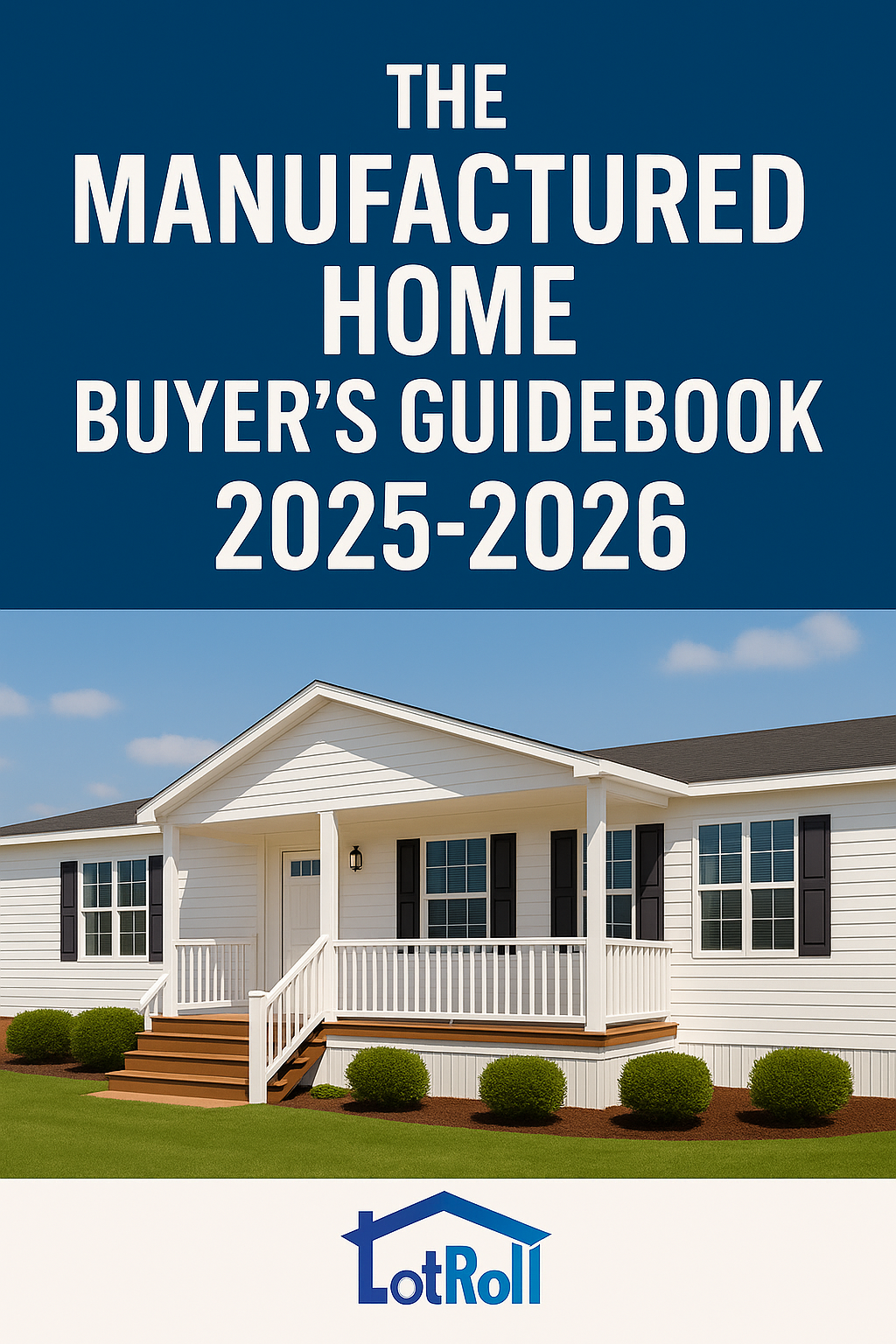
Buying a manufactured home shouldn’t feel confusing or overwhelming — but for most people, it does.
Online, you’ll find outdated articles, mixed advice, and traditional real-estate information that simply does not apply to manufactured housing.
- Manufactured homes follow different rules.
- Financing is different.
- Insurance is different.
- Titles are different.
- Communities are different.
- The buying process is different.
LotRoll was built to simplify all of it.
This guide walks you through the entire journey of buying a manufactured home anywhere in the United States, step-by-step, with clarity, honesty, and the real information you can’t find anywhere else.
SECTION 1 — WHAT A MANUFACTURED HOME ACTUALLY IS
Many people use terms like “mobile home,” “trailer,” or “prefab,” but the official term is manufactured home.
A manufactured home is:
- built in a factory
- constructed to the HUD national building code
- transported to a site
- installed on land or in a community
- titled differently than a site-built home
These are NOT manufactured homes:
- modular homes
- tiny homes
- park models
- RVs
Those have different codes and financing rules.
Manufactured homes ARE:
- safe
- modern
- energy-efficient
- customizable
- affordable
- widely financed
- appreciated by millions of families
Manufactured housing is not “alternative housing.”
It’s simply one of the fastest, most affordable ways to become a homeowner.
SECTION 2 — IS A MANUFACTURED HOME RIGHT FOR YOU?
Manufactured housing fits millions of buyers, especially those who want:
✔ Lower housing costs
Monthly payments (home + lot rent) are often equal to or less than rent.
✔ A faster path to ownership
Down payments can be as low as 5–20%, far less than a site-built home.
✔ More space for the money
Manufactured homes offer larger floor plans for far lower prices.
✔ Equity building
Instead of throwing money into rent, you start investing in yourself.
✔ The 5–7 year “equity jump”
Many buyers purchase a manufactured home, build equity, then upgrade to:
- a bigger manufactured home or a site-built home using the equity as a down payment
✔ Community amenities
MH communities often include pools, parks, clubhouses, and security.
✔ Flexibility
You can live:
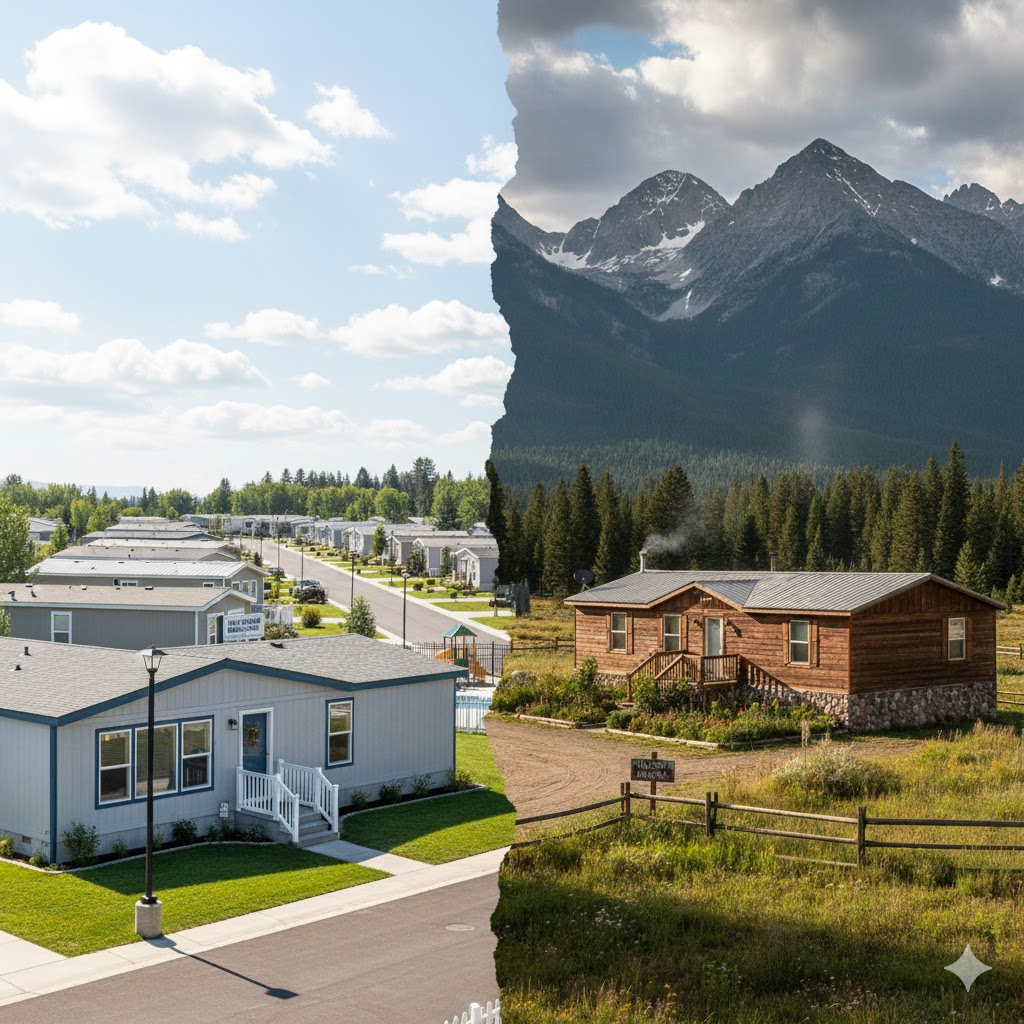
- in a land-lease community
- on your own land
- in rural, suburban, and some urban areas
If affordability, flexibility, and equity matter to you… Manufactured housing is a strong option.
SECTION 3 — WHERE YOU CAN BUY A MANUFACTURED HOME
There are two main buying paths:
Path 1: Buying a Manufactured Home on Private Land
This makes the home “real property” if placed on a permanent foundation.
Pros
- potential for appreciation
- stronger financing options
- You own the land
- higher resale value
Cons
- higher upfront cost
- foundation requirements
- more paperwork
Path 2: Buying a Manufactured Home in a Community (Land-Lease)
You own the home but rent the land.
Pros
- least expensive entry
- lowest down payments
- fastest approvals
- amenities and management
Cons
- monthly lot rent
- community approval required
- Resale value depends on the park
SECTION 4 — HOW TO FINANCE A MANUFACTURED HOME
This is where most buyers get confused — because MH financing is not the same as buying a traditional house.
Most banks and big lenders don’t understand MH lending.
LotRoll works only with manufactured-housing specialists.
LotRoll’s MH-Specialized Lenders
You get access to lenders who understand MH titles, chattel rules, HUD tags, community requirements, and older-home underwriting:
- Triad Financial Services (often the best rates/terms)
- 21st Mortgage
- Mobile Fund Services
These lenders know MH.
Down Payments: 5–20%
Most MH loans require:
- 5–10% down for newer homes
- 10–20% down for older homes or those in parks
Example:
A $80,000 home may need as little as $4,000–$8,000 down.
Loan Terms: 10–25 Years
Terms depend on:
- home’s age
- loan amount
- credit
- condition
- whether it’s in a park
Most common terms:
- 10 years (older homes)
- 15 years
- 20–25 years for higher loan amounts
What Lenders Look At
Manufactured-home lenders evaluate:
- credit score
- debt-to-income ratio
- stability of income
- age/condition of home
- community approval
- valuation
They specialize in MH, so buyers often get approved even when big banks say no.
SECTION 5 — INSURING A MANUFACTURED HOME
Insurance is another area where MH differs from site-built.
LotRoll partners with brokers who quote from the top MH carriers:
Foremost
Often, the best combination of price + coverage for MH.
American Modern
Strong option for older homes.
Allstate
Broad coverage depending on the state.
Manufactured Home Insurance Covers:
- replacement cost
- fire, wind, hail
- theft
- liability
- personal property
- park requirements
- lender requirements
National average cost: $80–$120 per month
Higher in wildfire or coastal zones.
SECTION 6 — HOW MH VALUATIONS WORK (NOT LIKE SITE-BUILT HOMES)
Manufactured home valuations depend on:
- age
- condition
- community reputation
- size
- HUD code
- upgrades
- market demand
- Regional MH sale history
Traditional site-built tools cannot value a manufactured home correctly.
LotRoll’s valuation system uses MH-specific sales data to give you:
- true value
- negotiation power
- insurance clarity
- equity estimate
- refinance options
It takes seconds, and it’s free.
SECTION 7 — STEP-BY-STEP: HOW TO BUY A MANUFACTURED HOME
Step 1 — Get Preapproved
Optional but extremely helpful.
You’ll learn:
- loan amount
- down payment
- monthly payment
- lender requirements
- park approval guidelines
Step 2 — Search Homes on LotRoll
Filter by:
- Price
- bedrooms
- location
- community
- land vs park
- financing compatibility
- year built
Step 3 — Get Community Approval (If Buying in a Park)
Most parks review:
- credit
- background check
- income
- pet/vehicle policies
LotRoll provides community info directly in your tools.
Step 4 — Make an Offer
Your offer depends on:
- valuation
- condition
- competition
- park rules
- seller motivation
Step 5 — Inspection
MH inspections typically include:
- roof
- plumbing
- HVAC
- electrical
- moisture barrier
- tie-downs
Average cost: $350–$500
Step 6 — Finalize Financing + Insurance
Your lender completes final verification.
Your insurance must be active before closing.
Step 7 — Title Transfer + Closing
MH titles differ by state, but generally include:
- HUD tag verification
- serial number
- bill of sale
- title transfer
- community lease agreement (if in a park)
LotRoll provides tools to simplify this.
Step 8 — Move In + Build Equity
Your payment is no longer rent — it’s an investment in yourself.
SECTION 8 — BUYER FAQ
Do manufactured homes appreciate?
Yes — especially newer homes, double-wides, and homes on owned land.
Can I buy a used manufactured home?
Yes. Many lenders finance homes from the 1970s–1990s as long as the condition is good.
How fast can I buy?
Some buyers close within 2–4 weeks.
Is fire insurance required?
Yes. Most parks and lenders require it.
What affects MH value the most?
Condition, upgrades, age, and community.
Can I negotiate price?
Yes, and valuations help dramatically.
SECTION 9 — WHY BUYERS USE LOTROLL
✔ One platform for everything
Financing, insurance, valuation, and listings.
✔ MH-specialized partners
Lenders and insurers who actually understand MH.
✔ Accurate valuations
Not site-built guesses — real MH data.
✔ Faster approvals
Get matched instantly to MH-specific options.
✔ Simple, human, supportive
We built LotRoll to help real families, not overwhelm them.
Get started at LotRoll.com
Get a free manufactured home valuation or explore listings today — no login required.
LotRoll is here to make homeownership simple, clear, and affordable.