Understanding Key Differences Between Manufactured Home Sales and Traditional Home Sales
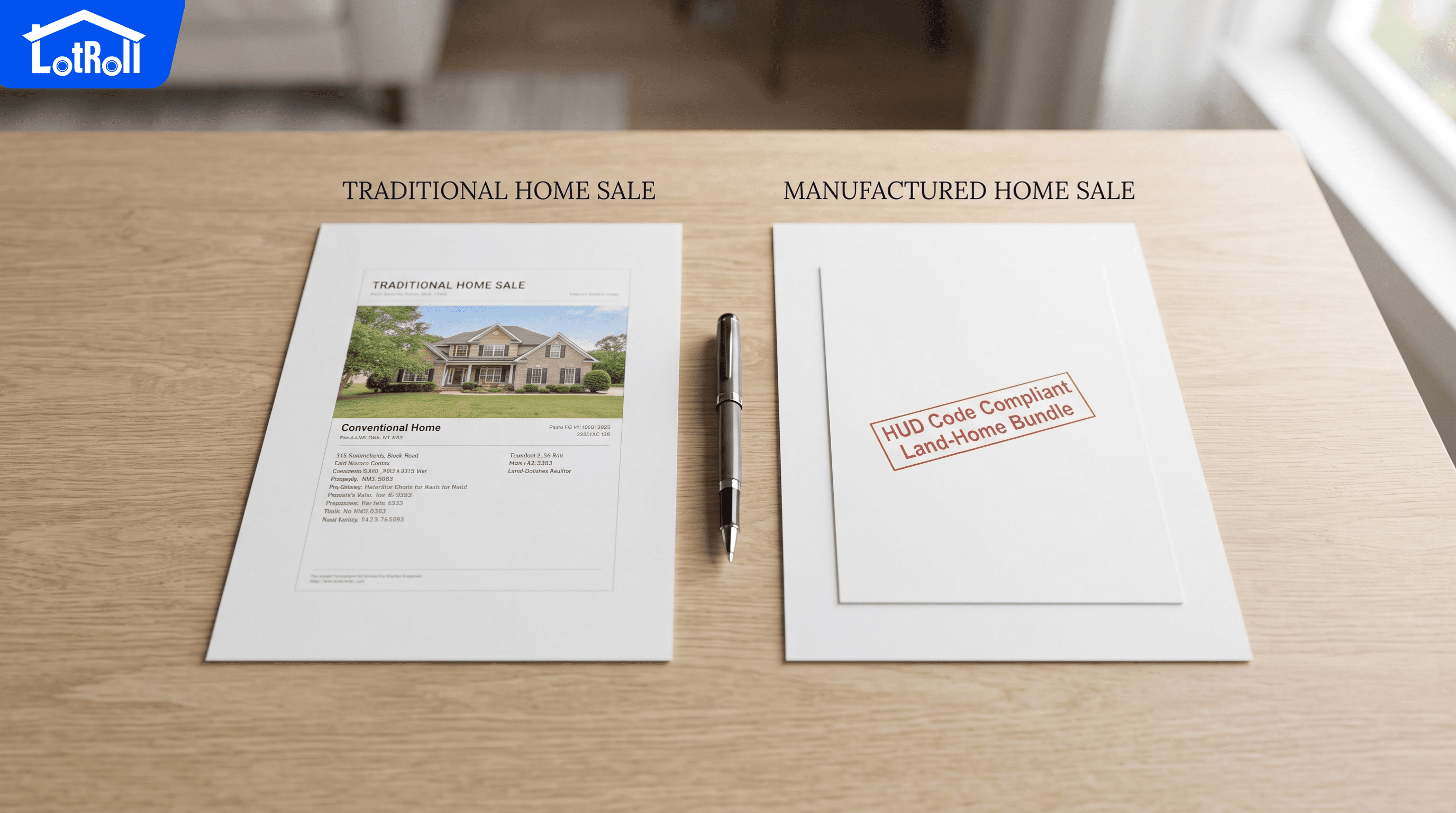
Manufactured homes offer many first time buyers a more affordable avenue to home ownership that hasn’t existed before. However, these buyers often also have to jump through hoops that don’t necessarily exist in traditional real estate. Manufactured homes sales can be impacted by things like community approval requirements, DMV title transfers, and unique finance and insurance policies that don’t affect traditional real estate.
How Park Approvals can Impact Sales
One of the many ways that manufactured home sales differ from traditional sales is that the market can be impacted by buyer or park approval. In traditional home sales, only approval from the lender is required to complete a title transfer, whereas in manufactured homes, a park approval may be required based on local zoning laws. These approvals come from a third party, and can terminate the sale of the home even after a buyer and seller have agreed on terms. Because the land is leased as well as the home, these sales open buyers up to more obstacles in purchasing.
Titles are more Complicated
Unlike traditional homes, which tend to be sold via deeds, manufactured homes tend to be sold similarly to cars, and thus receive a certificate of title instead of a deed. Buyers oftentimes cannot qualify for a traditional mortgage because manufactured homes are not always sold with land attached to them, and therefore do not receive traditional financial backing. If owners want to receive this financial help, they must jump through several hoops to convert the title that the land is classified under.
More Significant Financing Challenges
Due to the complex titling that manufactured homes deal with, the financial backing buyers get is also much more complicated than traditional mortgage programs. Manufactured homes do not often qualify for most mortgage programs due to the land the home is on, which means that consumers have access to fewer options when it comes to financing their homes. Many have to use chattel loans on the property, which typically have higher interest rates and shorter repayment windows than traditional mortgage loans.
Additionally, loans for manufactured homes are denied significantly more often than traditional home loans are, due to the limited support for these personal property loans and the regulations in these programs that don’t account for the manufactured sector.
Unique Insurance Requirements
Since insurance has to be specialized for factory-built homes and account for completely different conditions, many carriers restrict coverage based on home foundation type, location, or age of the home, leading buyers to be faced with fewer carrier options or higher premiums. Loan programs often require proof of insurance before assisting in financing, and loans tend to differ across properties depending on how they are listed.
Specialized Valuations
In traditional home sales, valuations tend to be based on comparable sales data on nearby homes. With manufactured homes, this is challenging because of how limited the data is, meaning that appraisers must try to seek out similar home sales and make a distinction between personal and real property. Additionally, homes on leased land vs. owned land must be valued differently, meaning that these valuations often need to be done by those with specific industry knowledge, which can be difficult to find.
Manufactured home sales face several unique challenges that traditional real estate does not. Community approvals, specialized financing, insurance requirements, land leases, and title statuses are all unique to the sector, and understanding these key differences can assist buyers, sellers, financiers, and real estate professionals in achieving transaction success.