Mobile Home vs Manufactured Home vs Modular Home: What's the Difference?
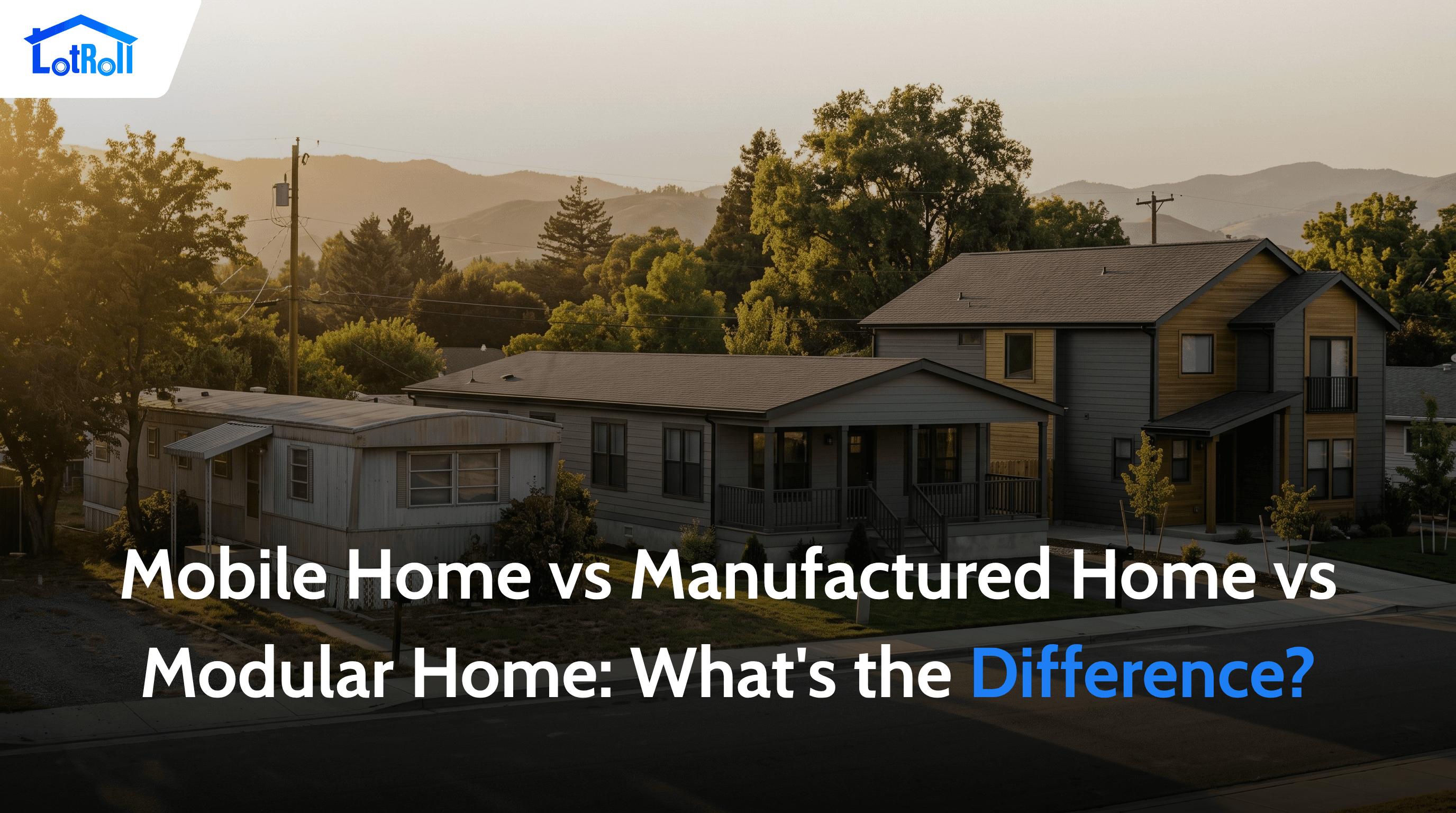
A manufactured home is built in a factory to the federal HUD Code, which applies to homes built after June 15, 1976. A mobile home is the same kind of factory-built home made before that date. A modular home is also built in a factory, to the state and local building codes that apply to site-built houses.
Most people still search for "mobile homes," and listings use mobile and manufactured interchangeably. Which one you are looking at decides how the home is titled, which loans are available, where it can go and who can buy it from you later.
What is a mobile home?
"Mobile home" is the older name for a home built in a factory on a chassis and moved to its site. HUD describes a manufactured home as one "formerly known as a mobile home." In strict terms, a mobile home is one built before June 15, 1976, the date the federal construction standards began to apply. In everyday use, people call homes of every age mobile homes. Lenders, insurers and local officials go by the year of manufacture.
What is a manufactured home?
A manufactured home is built to the Manufactured Home Construction and Safety Standards (24 CFR Part 3280), usually called the HUD Code. Congress authorized the standards in the National Manufactured Housing Construction and Safety Standards Act of 1974, and HUD says all manufactured homes built in the U.S. after June 15, 1976 must be certified by the manufacturer as built to them.
Federal law defines a manufactured home as a structure "transportable in one or more sections," at least 8 body feet wide or 40 body feet long when traveling, or at least 320 square feet once set up, designed as a dwelling with or without a permanent foundation. Because the HUD Code is national, states and cities cannot set different construction standards for these homes. States can still set rules for their foundations and how they are anchored.
What is a modular home?
A modular home is built in sections in a factory and assembled on a permanent foundation at the site. Texas, for example, states that "manufactured housing is constructed to Federal HUD code standards and industrialized housing is constructed to the same codes as traditional site built housing." Once installed, a modular home typically becomes part of the land and is titled like any other house. The Census Bureau notes that modular homes require a building permit and are subject to local zoning and building code standards.
How can you tell which one you have?
Look for two federal labels that every manufactured home carries:
• The HUD certification label (HUD tag). A red metal plate about 2 by 4 inches, riveted or screwed to the outside of each transportable section. The regulation places it at the taillight end of each section, about one foot up from the floor and one foot in from the road side, unless the approved design puts it in another visible spot on the exterior. A double section home has two tags.
• The data plate. A paper sheet about 8½ by 11 inches inside the home, usually in a kitchen cabinet, near the electrical panel or in a bedroom closet. It lists the manufacturer and plant, the serial number, the model, the date of manufacture, the HUD label numbers for each section, the major factory-installed equipment, and the wind and roof load zones the home was designed for.
If the tag is missing, the owner can request a Letter of Label Verification from the Institute for Building Technology and Safety, which HUD names on its label page. No HUD tag and a manufacture date before June 15, 1976 means a mobile home. A modular home has no HUD tag; in states that use one, it carries a state certification decal instead, as Texas requires on each module.
How do they compare side by side?
• Built. Mobile home: Before June 15, 1976. Manufactured home: After June 15, 1976. Modular home: Any year.
• Code. Mobile home: Built before the HUD Code. Manufactured home: Federal HUD Code (24 CFR 3280). Modular home: State and local codes, same as site-built.
• Label. Mobile home: No HUD tag. Manufactured home: Red HUD tag on each section, plus data plate. Modular home: State decal where required.
• Foundation. Mobile home: Depends on how it was installed. Manufactured home: Temporary or permanent. Modular home: Permanent.
• Title. Mobile home: Personal property, or real property in some cases. Manufactured home: Personal property, or real property when set on owned land and converted under state rules. Modular home: Real property, like a site-built house.
• Typical financing. Mobile home: Not eligible for FHA insurance; options are limited. Manufactured home: Chattel loan, FHA Title I, or a mortgage (including FHA Title II) if titled as real estate. Modular home: Usually the same mortgages as a site-built house.
• Where it goes. Mobile home: Communities, or private land where local rules allow older homes. Manufactured home: Communities, or private land where zoning allows. Modular home: Lots where a site-built house is allowed, with a building permit.
Sources: HUD, Texas Department of Licensing and Regulation, CFPB, HUD FHA reference guide. Title and placement rules vary by state.
What do single wide, double wide and triple wide mean?
These terms describe how many sections a home was built in. A single wide leaves the factory as one section. A double wide is two sections joined side by side at the site, and a triple wide is three. The Census Bureau's manufactured housing survey groups homes the same way: single, double, and three or more sections. Widths and lengths vary by manufacturer and model, so check the listing or the data plate for the size of a specific home.
Where do park model RVs and tiny homes fit?
A park model RV is a recreational vehicle, outside the HUD Code. Federal rules exempt it from the HUD Code when it is designed only for recreational use and not as a primary residence and built to the ANSI A119.5 standard. For a tiny home, apply the same test as above: ask which code it was built to and look for a HUD tag, a state decal or an RV certification.
Why does the difference matter?
Financing. To qualify for FHA mortgage insurance under Title II, a manufactured home must be built after June 15, 1976 to the federal standards, have at least 400 square feet, sit on a permanent foundation and be classified as real estate. HUD's guidance says homes built before that date must be rejected, with no exceptions. A home titled as personal property is usually financed with a chattel loan, and the CFPB found chattel borrowers pay higher interest rates than manufactured home mortgage borrowers. Our guide to financing a manufactured home walks through each loan type.
Insurance. Have the year built, the HUD label or decal number and the installation details ready when you ask for insurance quotes. See manufactured home insurance explained for what coverage looks like.
Zoning and placement. Local zoning decides where each type can go, and state law can set limits on it. California, for example, requires cities and counties to allow HUD Code homes on a foundation on lots zoned for single-family houses, but lets them refuse a home if more than 10 years have passed since it was built.
Resale. How a home is titled affects who can buy it and with what loan, which shapes its resale value. In 2018 the Federal Housing Finance Agency published experimental price indexes for manufactured homes titled as real estate and found price trends broadly similar to those of other homes, with a deeper drop in the late-2000s housing bust. Those indexes cover only homes titled as real estate, so they say nothing about homes titled as personal property.
Browse mobile and manufactured homes for sale on LotRoll. Search homes for sale
Frequently asked questions
Is a mobile home the same as a manufactured home?
They are the same type of factory-built home. The difference is the date. Homes built after June 15, 1976 to the federal HUD Code are manufactured homes; those built before it are mobile homes. People use both words for both.
Is a modular home a manufactured home?
No. A modular home is built in a factory to the state and local codes that apply to site-built houses, sits on a permanent foundation and is usually titled as real property. A manufactured home is built to the federal HUD Code.
Can I get an FHA loan on a mobile home built before 1976?
No. HUD's guidance says manufactured homes built before June 15, 1976 must be rejected for FHA insurance. Homes built after that date can qualify if they meet the other requirements, including the HUD label on each section.